The Artist
Waldemar Cordeiro (b. 1925, Rome, Italy ; d. 1973, São Paulo, Brazil)
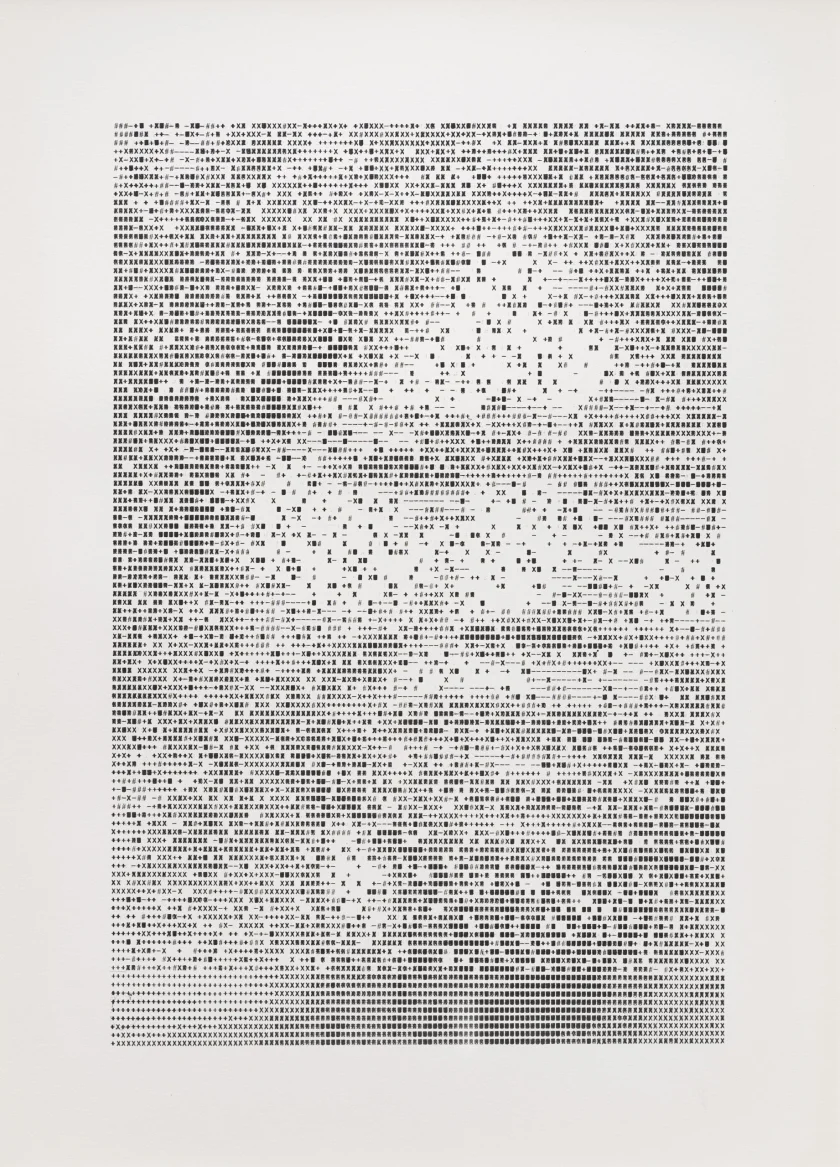
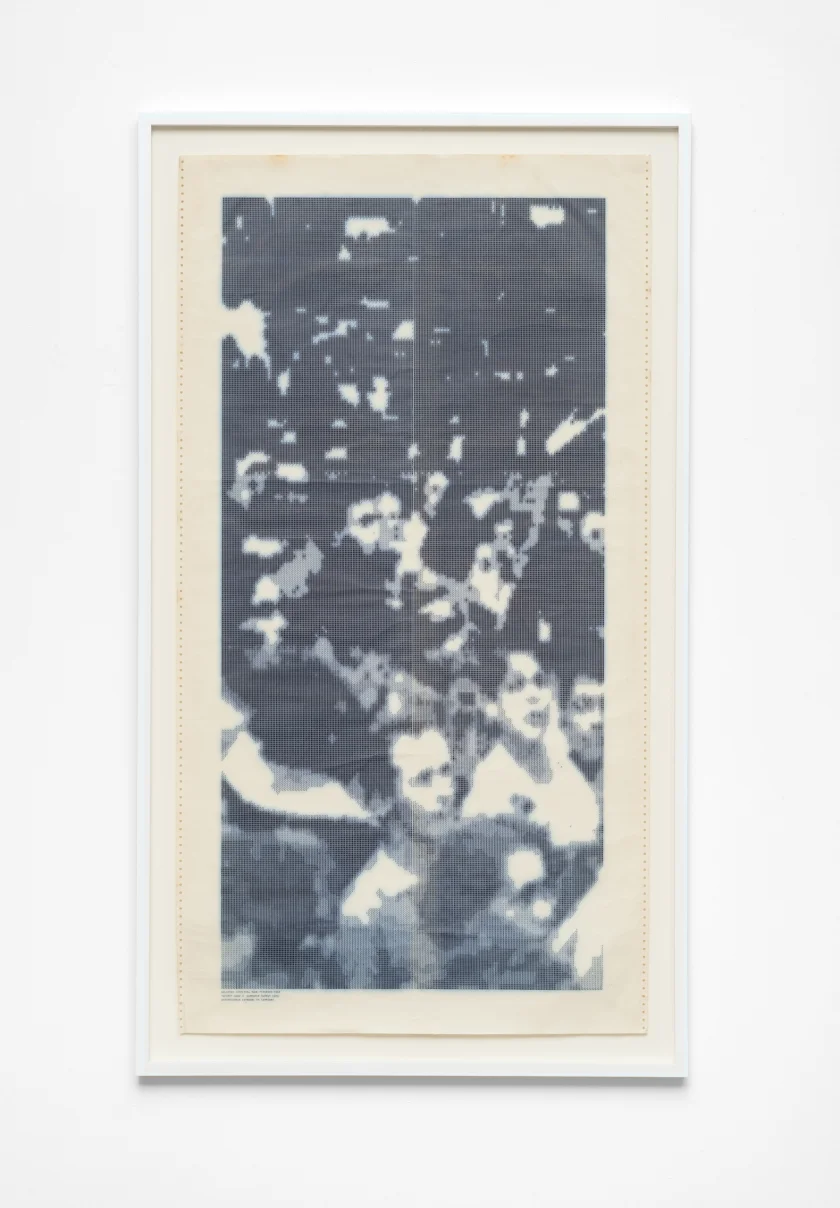
Gente Grau 0 (1973)
Computer output on paper, 140.5 x 75 cm
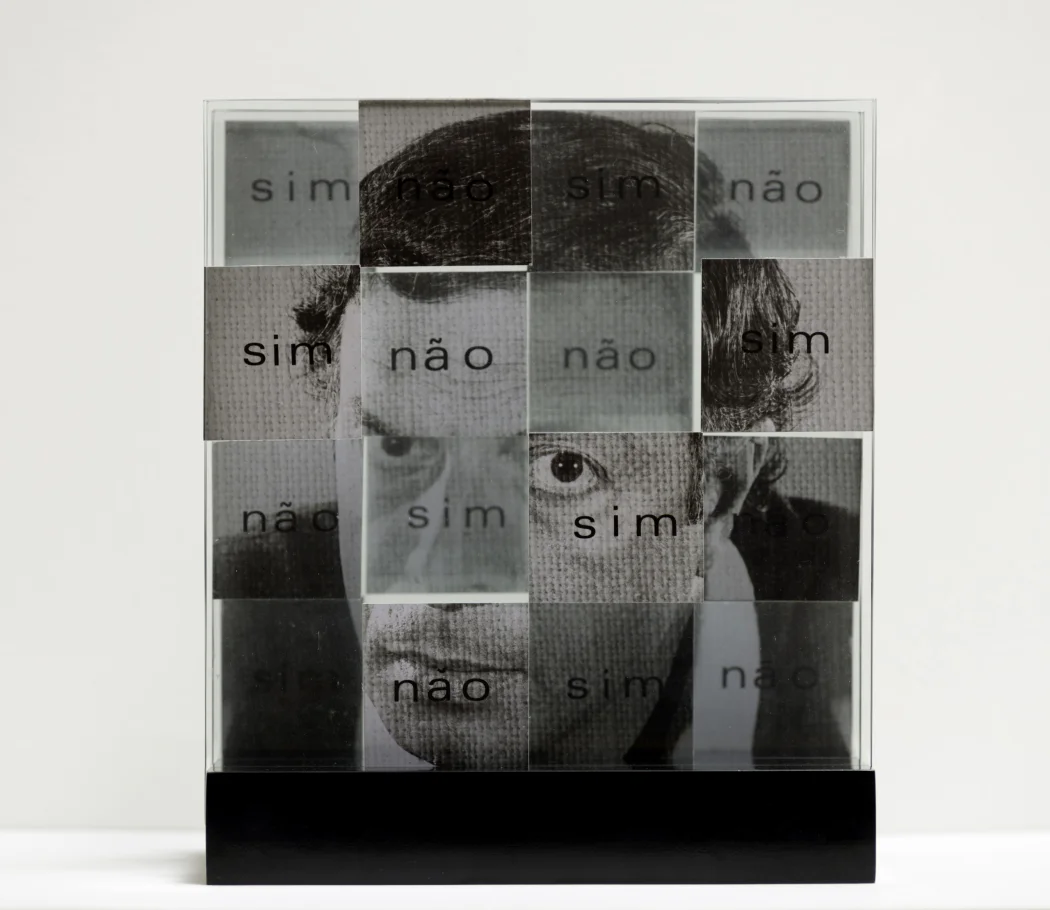
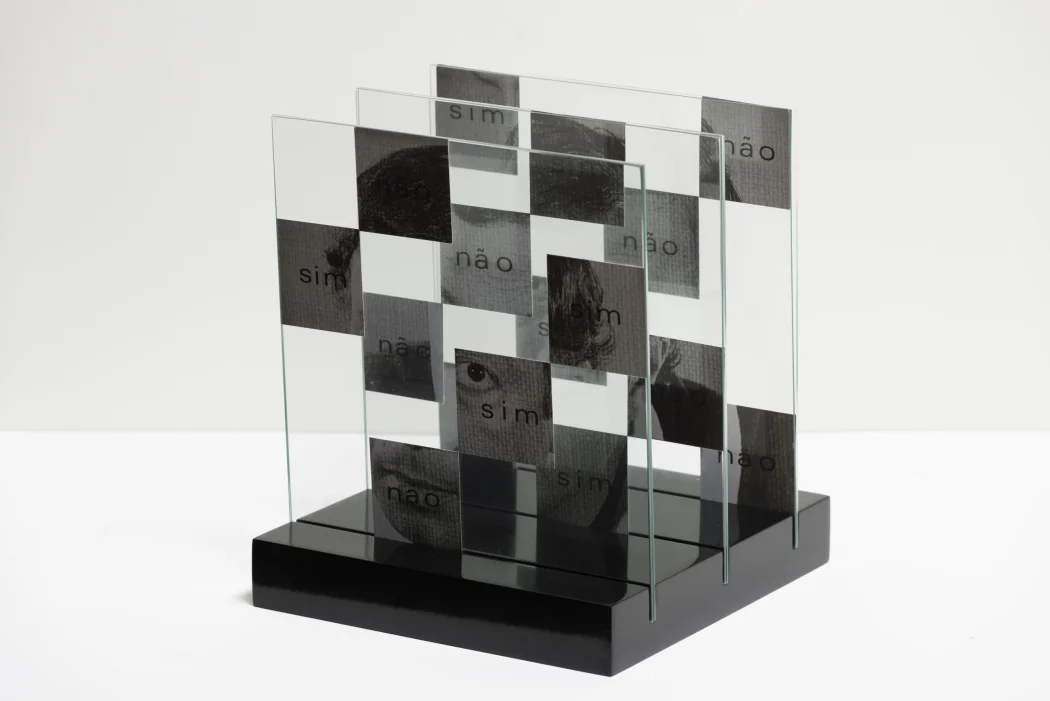
Autoretrato Probabilistico (1967)
Acrylic, wood and photograph, 34.5 x 29.5 x 31 cm
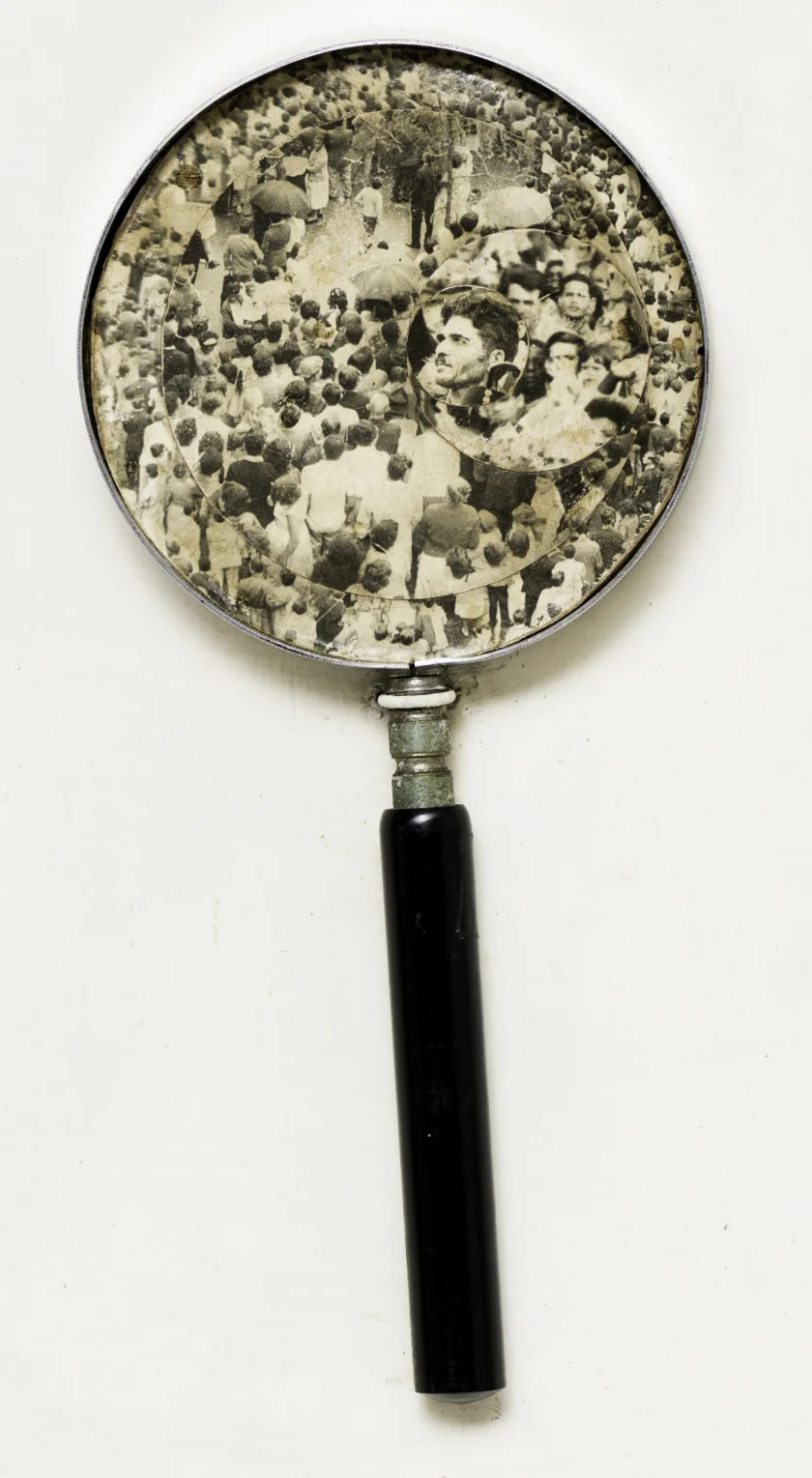
Massa sobre individuos (Mass over individuals) (1964)
Photo collage on magnifying glass. 32 x 22.5 x 1.5 cm
The Woman is Not B.B. (Brigitte Bardot) (1971)
Offset print, 61 x 44.5 cm
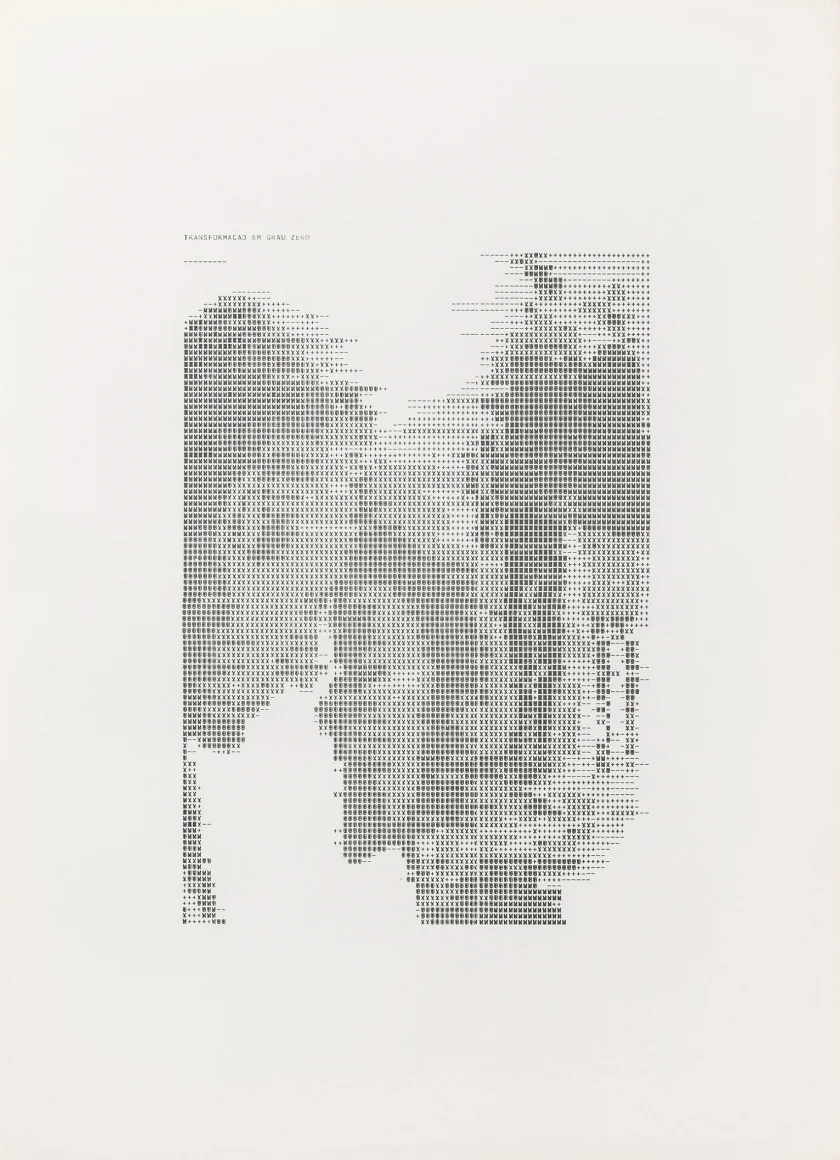
Derivatives of an image: Transformation in Degree 0 (1969)
Offset print, 61,2 x 44,5 cm
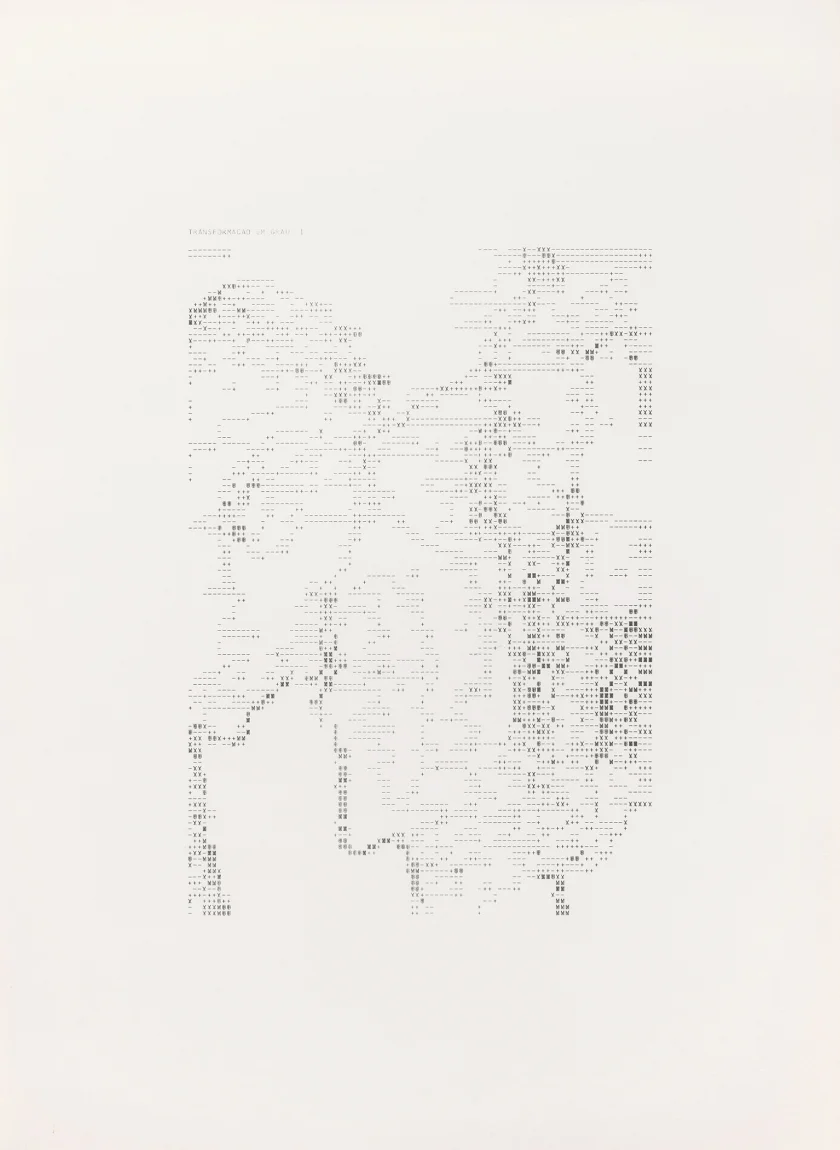
Derivatives of an Image: Transformation in Degree 1 (1969)
Offset print, 61 x 44.5 cm
Waldemar Cordeiro was the first artist in Latin America to create computational art in the late 1960s and 1970s and one of the first artists to make digital works articulating sociopolitical critique.
Cordeiro’s “Derivatives of an Image” series are major historical works that transformed photographic images into discrete numerical data at a moment when digital image technologies were still largely experimental. Using a pioneering method for digitizing images before the development of scanners and manually constructing a grid and a system of tonal values, Cordeiro anticipated the pixel-based logic of digital photography and image processing.
In Gente Grau 0 (People Degree 0) (1973), the expressive faces of the crowd press against each other in an image translated from a photograph documenting a protest in a public square in São Paulo during the most severely repressive period of Brazil’s military dictatorship. Cordeiro sourced the image from a local newspaper, then subjected it to a process of manual digitization. Another version of this work is held in the collection of the MoMA in New York.
In A Mulher que Não É B.B. (The Woman Who Is Not B.B.) (1971), Cordeiro used the image of a Vietnamese victim of war as a counterpoint to French actress Brigitte Bardot, then one of the most celebrated film stars in the world. By replacing random digits by “x” to symbolize the destruction as a result of the war, Cordeiro infused the work with a political pacifist statement.
In Auto-Retrato Probabilistico (Probabilistic Self-Portrait) (1967), Cordeiro uses his own image at the base of a three-dimensional deconstructed work. His image is spliced into sections and overlaid with ‘yes’ and ‘no’ in Portuguese printed in concrete poetry style typography to convey a binary and yet multi-perspectival message.
Waldemar Cordeiro was a Brazilian artist, critic, designer and landscape architect, and a central figure in the development of Concrete art in Brazil in the 1950s, which he spearheaded through the establishment of Grupo Ruptura (1952). Selected group exhibitions include the Venice Biennale (2024), Barbican, London (2006); Museo Nacional Centro de Arte Reina Sofía, Madrid (2001); São Paulo Biennial (1951, 1954, 1957, 1959, 1961, 1963 and 1965) and many others. His works are held in major museum and private collections internationally, including the Cisneros Collection (CPPC), Museum of Fine Arts, Houston, MoMA, New York, Reina Sofia, Madrid, Museum of Contemporary Art, São Paulo and the Victoria & Albert Museum, London.
The Gallery
The Mayor Gallery, the first gallery to open its doors in Cork Street, London, is celebrating its 100th anniversary this year in its new location at the heart of St James’s. Founded by Fred Mayor (1903-1973) in 1925, many artists were exhibited for the first time in England at The Mayor Gallery including Bacon, Calder, Ernst, Klee, Masson and Miro, amongst others.
The Mayor Gallery was also the centre of UNIT ONE, a group that included Henry Moore and Ben Nicholson. Fred’s son, James Mayor, took over the Gallery in 1973 and has shown, since then, the work of many leading American artists including Hesse, Lichtenstein, Martin, Rauschenberg, Ryman, Twombly, Warhol and Wesselmann.
The Gallery continues to show the works of leading Pop artists as well as European Nouveau Realism, Surrealist and Dada and is now internationally renowned for being London’s foremost gallery for the ZERO and international Concrete movements. The gallery regularly participates in international art fairs such as TEFAF (Maastricht), TEFAF (NYC), Art Basel (Basel), Frieze Masters (London)
Information
9 Bury Street, St James’s
London, SW1Y 6AB
United Kingdom