The Artist
Aglaia Konrad (b. 1960, Salzbourg, Austria; lives and works in Bruxelles, Belgium)
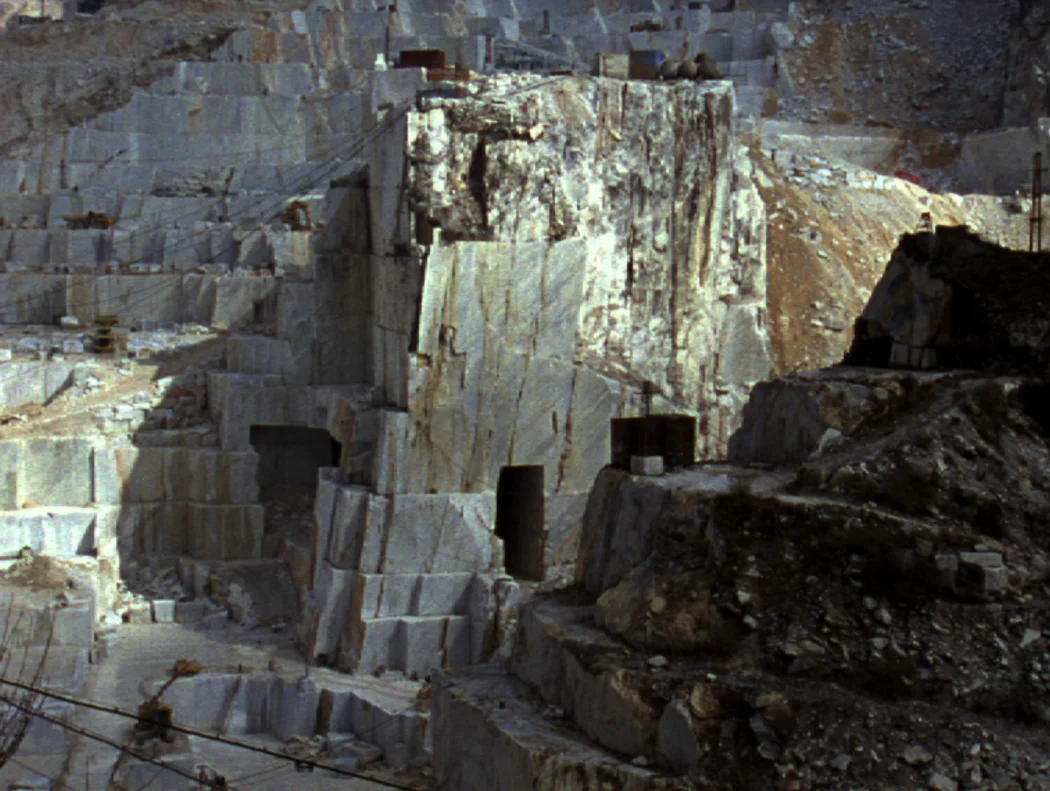
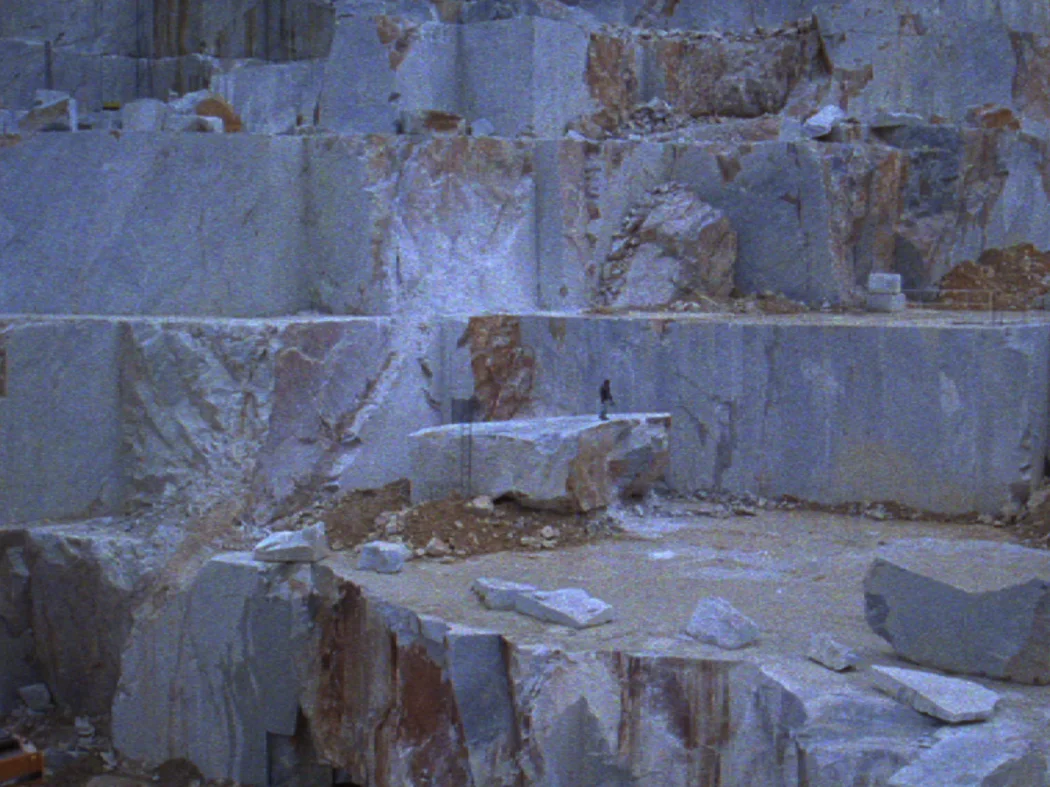
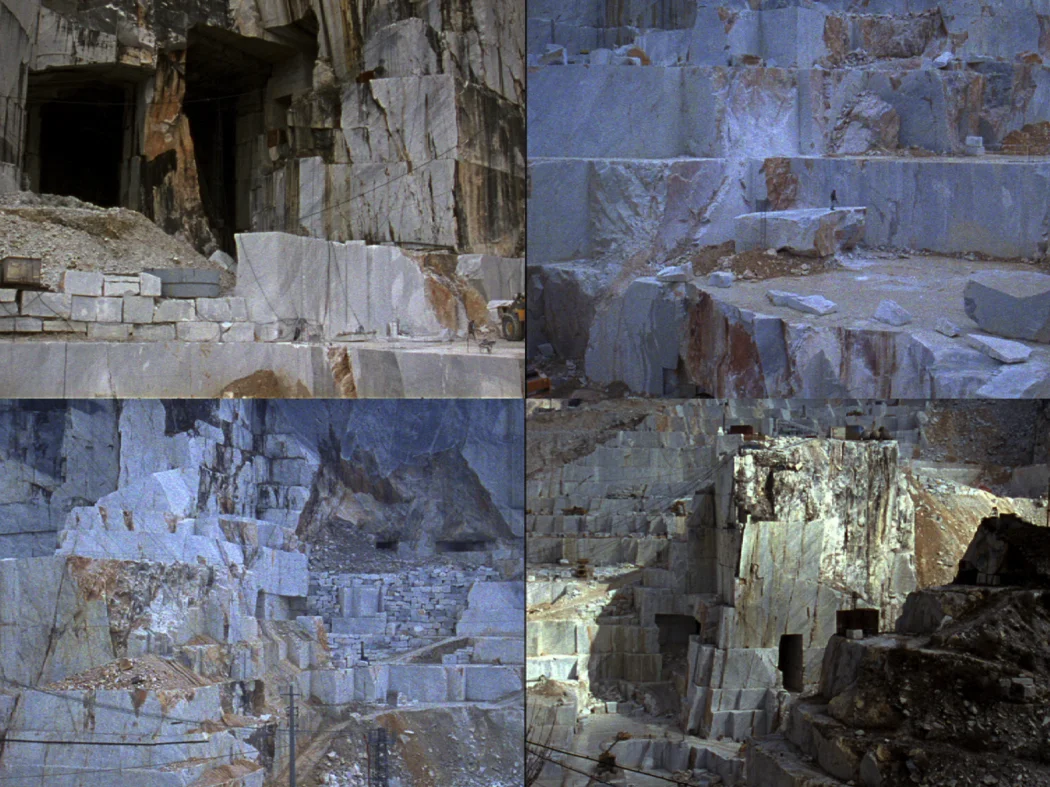
CARRARA (2010)
16 mm transferred to video, color, 4:3, silent, 19 min.
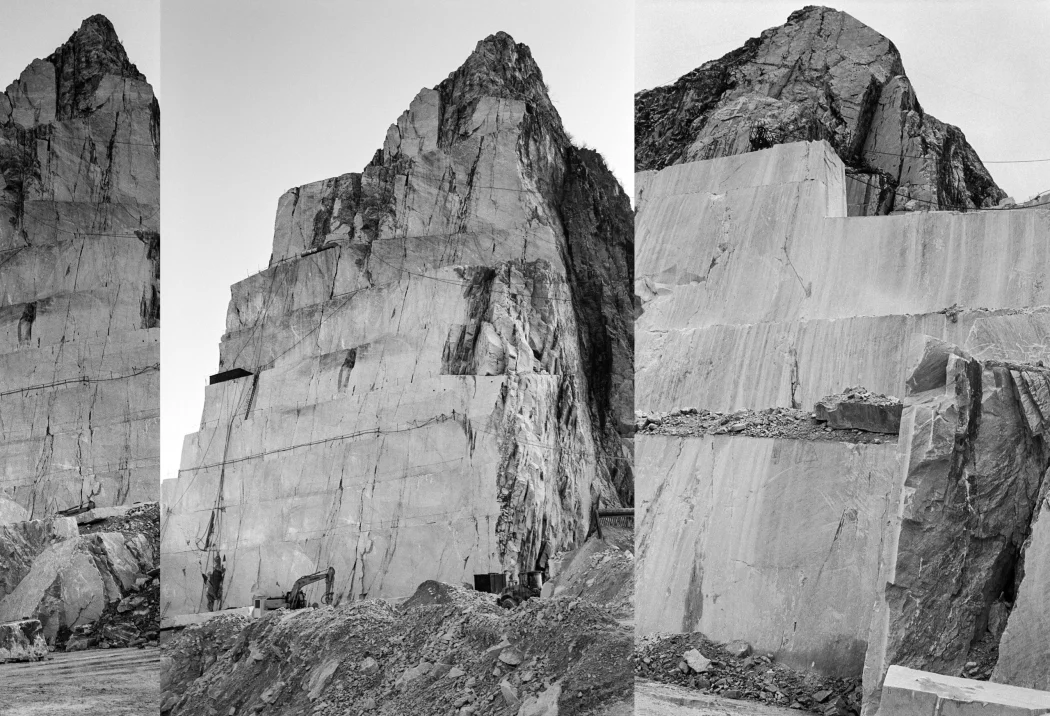
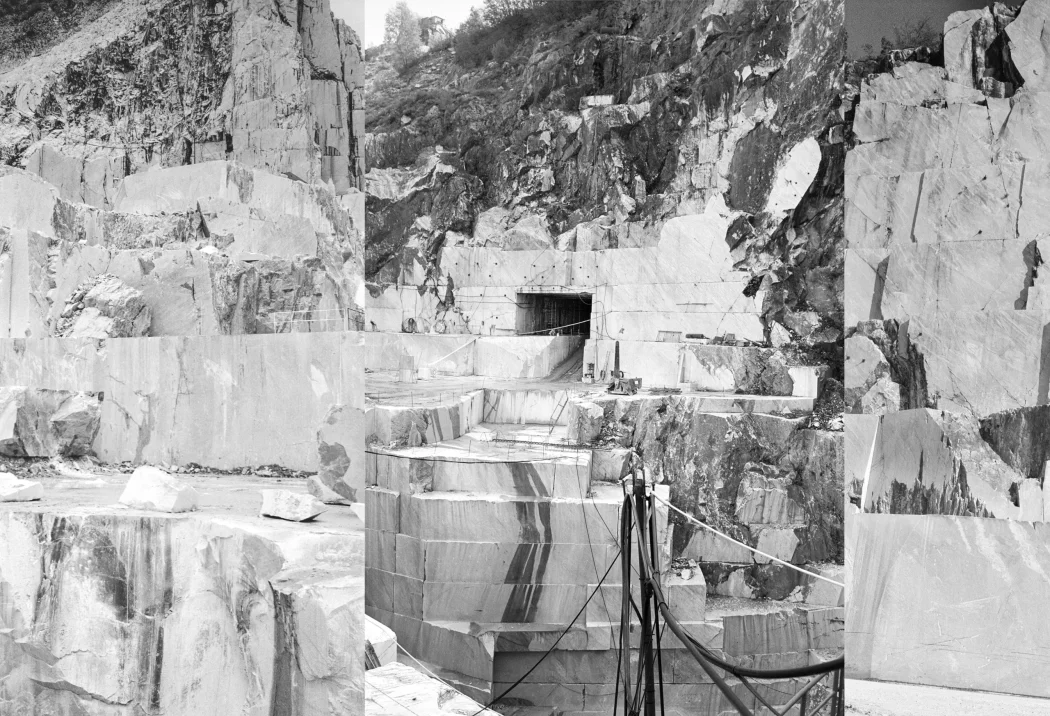
Carrara Cuts, pages (2011/2026)
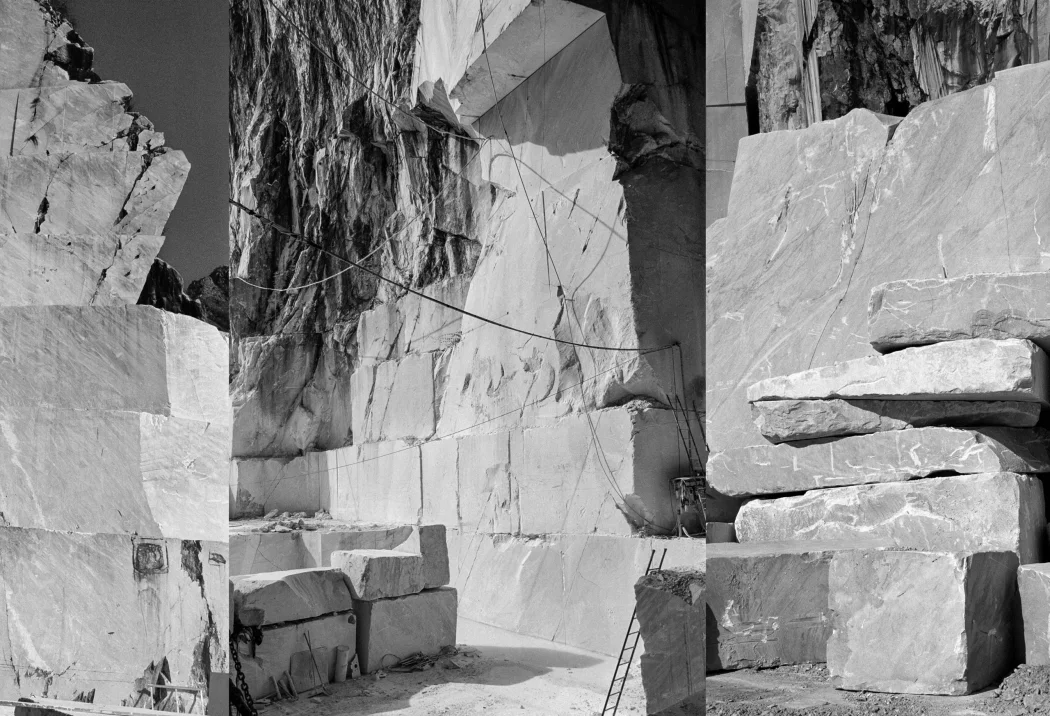
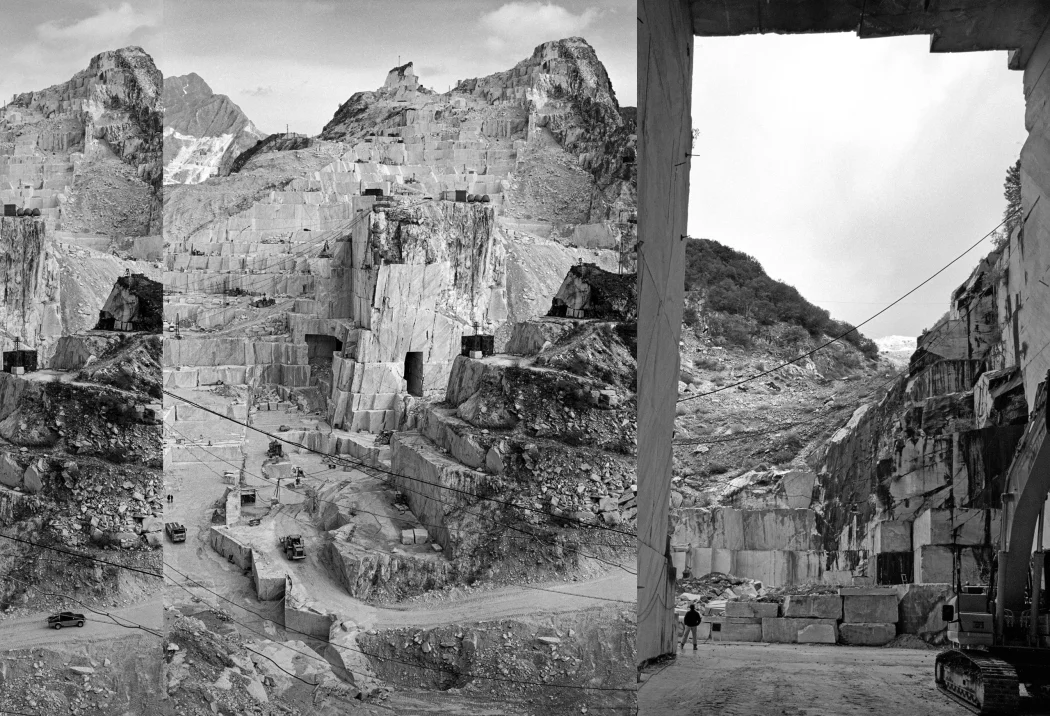
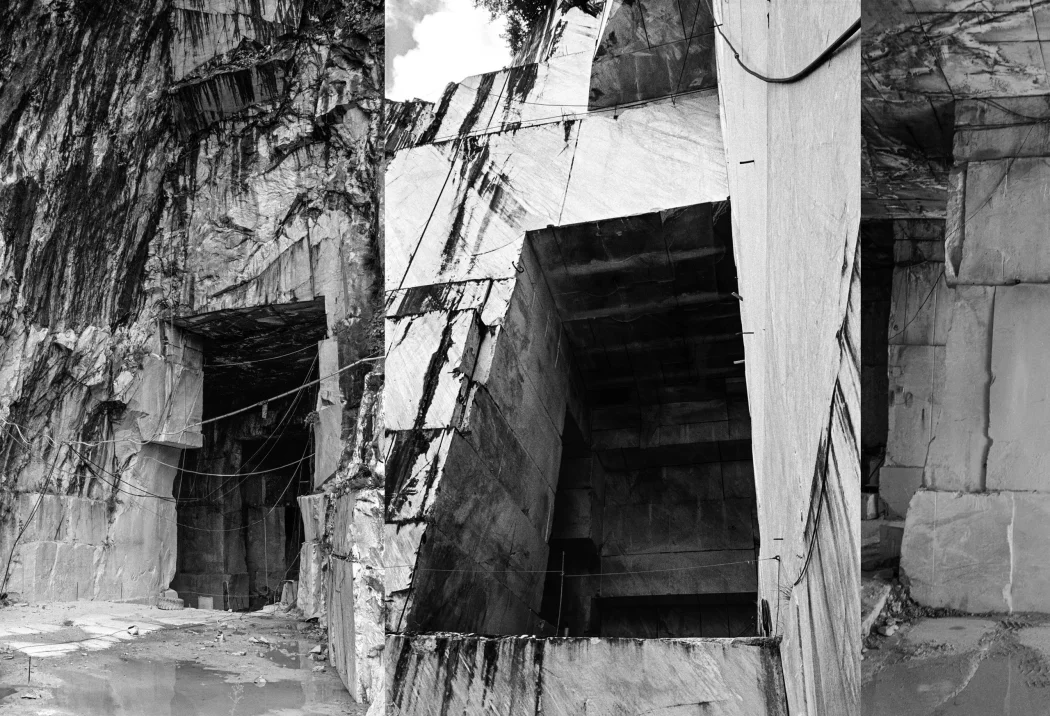
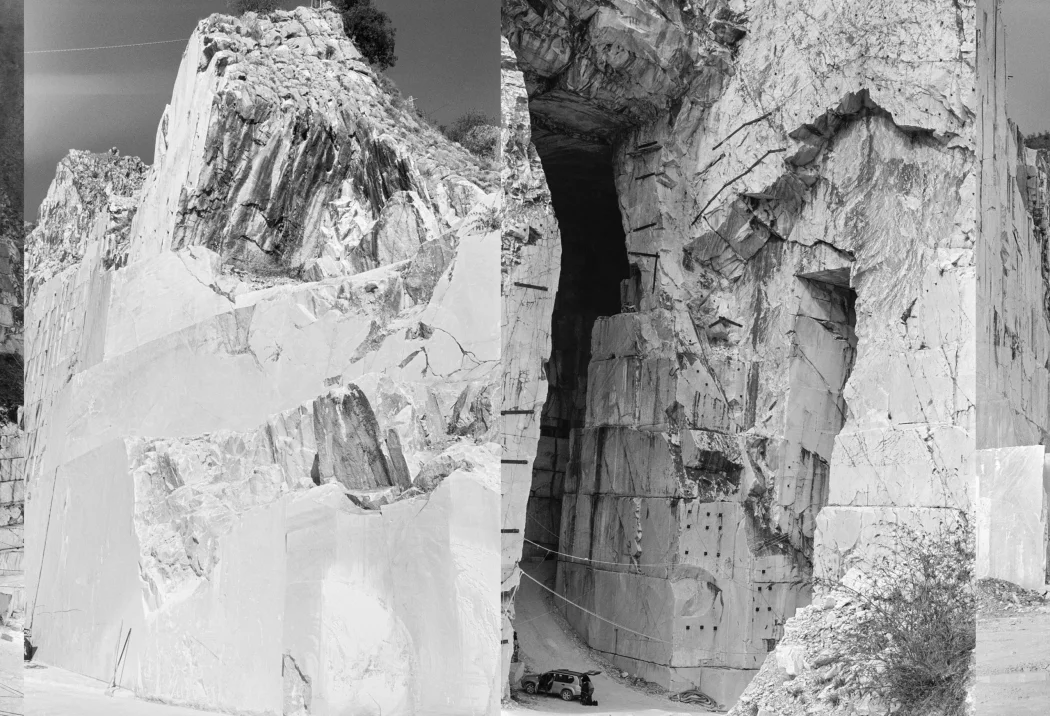
Black-and-white photographs, 47 x 70 cm
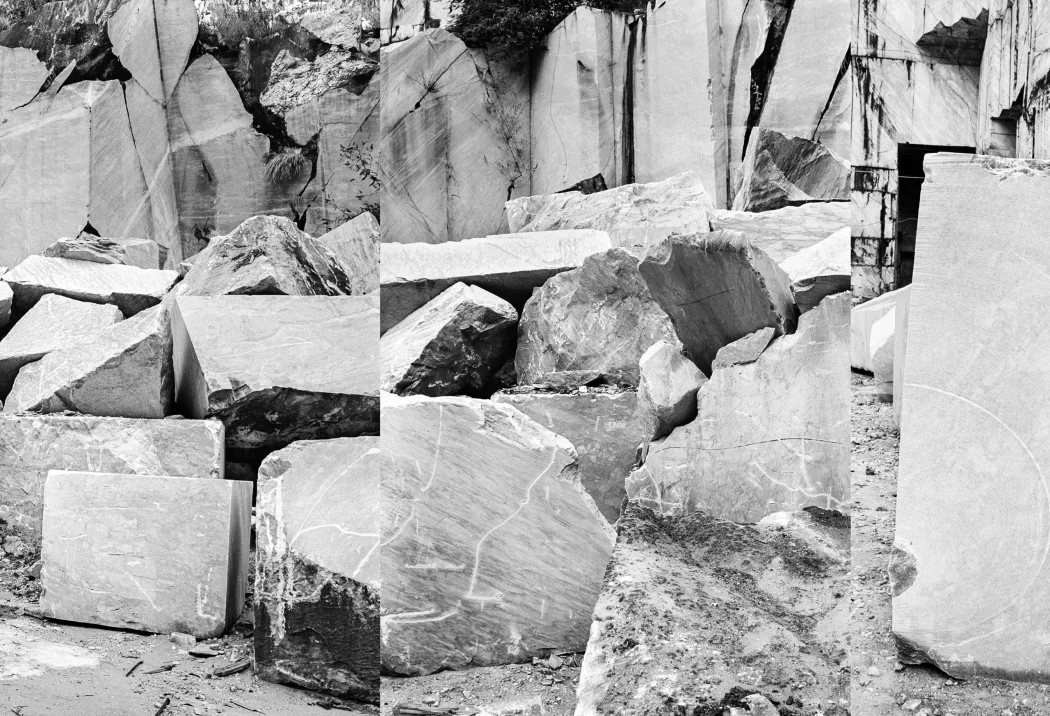
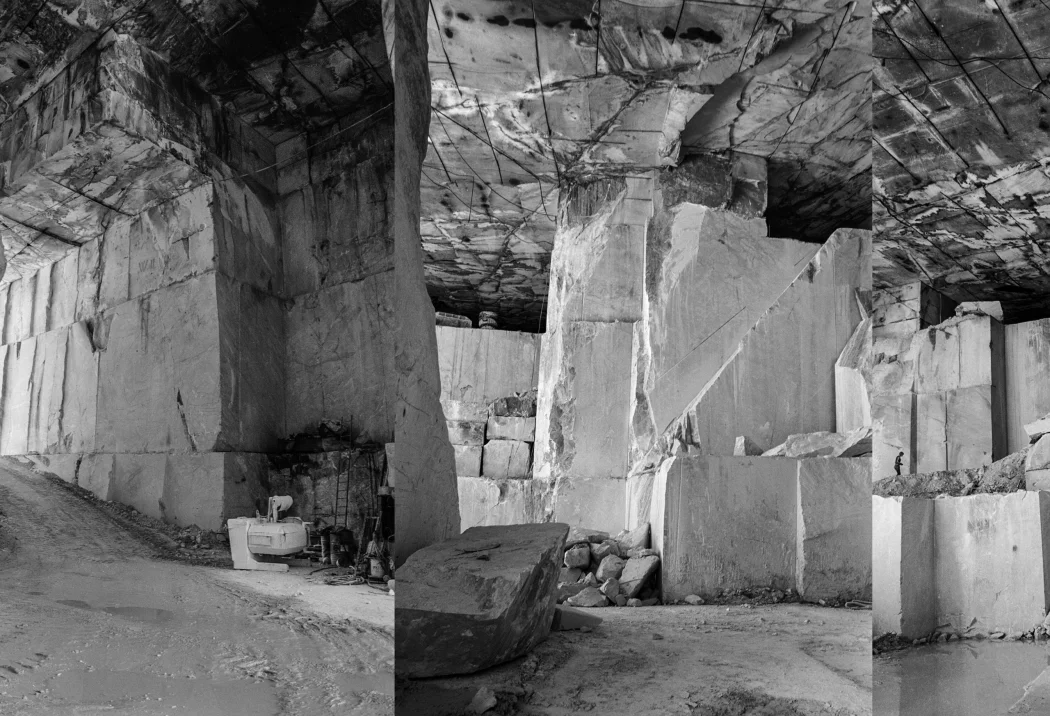
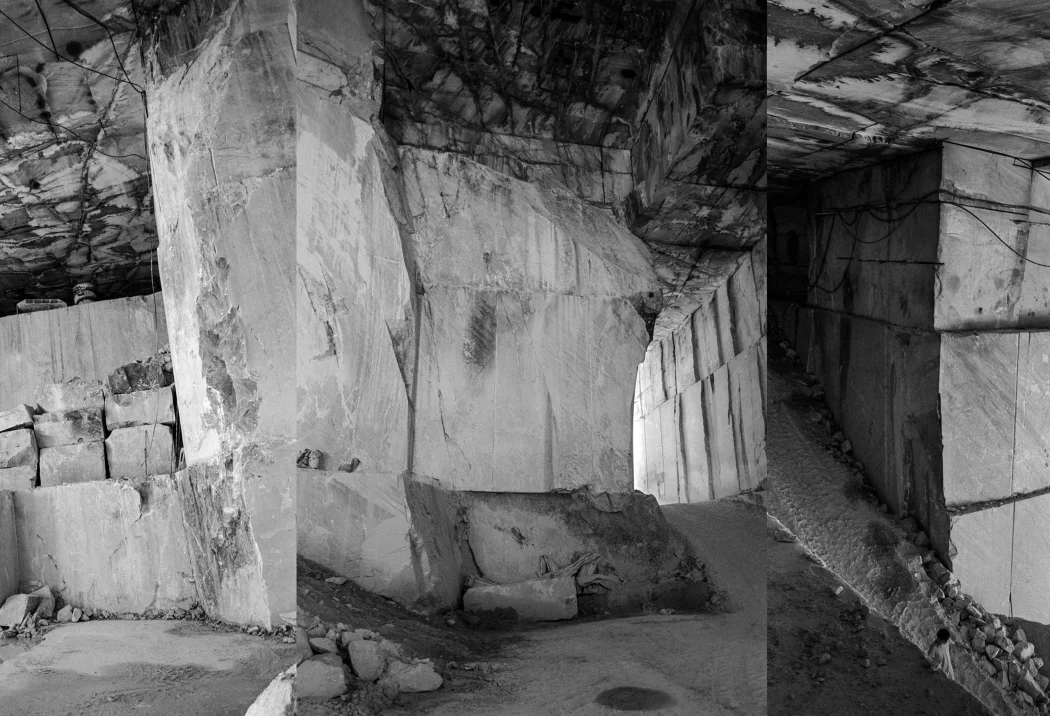
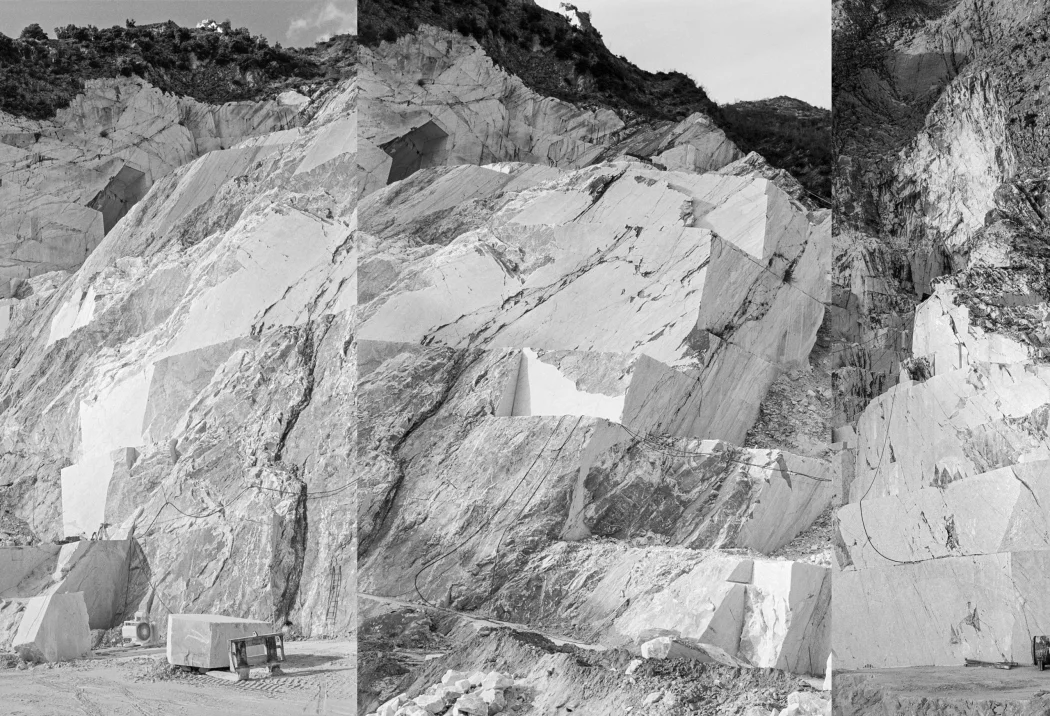
Aglaia Konrad’s film, CARRARA (2010) explores the renowned marble quarries of Carrara. Through a tectonic approach attentive to masses and volumes, Konrad reveals monumental and monolithic architectures that seem to emerge from mineral chaos. At first glance, the film might be seen as an observation of the mountain and a landscape laid bare by human exploitation. Yet Konrad’s camera reveals a more complex reality, where opposing forces clash: that which comes to the surface and that which disappears, that which is extracted and that which is reabsorbed back into the mountain. Shaped by subtraction, in a process analogous to that of a sculptor who brings forth a form by removing material, the mountain gradually unveils an architecture, for the ongoing extraction of marble paradoxically gives rise to monumental structures at the very heart of the massif. On the scale of the site, human activity seems minuscule, almost Lilliputian; yet it produces genuine architectural forms, even a form of urbanity. The film thus highlights a fundamental tension between the transformative power of human labour and its provisional nature. The architectural forms brought to light by the extraction process never constitute a definitive state: they are constantly reconfigured by ongoing quarrying, until they too are altered, erased or reshaped. The film is exhibited in dialogue with a series of photographs, Carrara Cuts, pages (2011/2026). Stone and rock occupy almost the entire frame in a sequence that juxtaposes images — cut in the same way as the blocks of marble — and lies at the crossroads of sculpture and architecture.
Aglaia Konrad’s practice is founded on a vast body of photographs — an atlas in the sense intended by Aby Warburg, a living memory — whose principal themes are international brutalism, contemporary metropolitan forms, the history of architecture, concrete and marble, architectural sculptures, utopias and their contradictions, building sites and demolitions. The artist conducts in-depth documentary investigations, which serve as both a preamble and an essential foundation for the way in which she presents her images. She creates exhibition installations in which her images are staged according to the specific spaces, contexts and situations in which they are displayed.
Recent solo exhibitions include the Secession, Vienna (2025), FOMU, Antwerp (2023), and Museum M Leuven (2016). She was awarded the Österreichischen Staatspreis für Fotografie in 2023 and took part in Documenta X in Kassel in 1997.
The Gallery
Established in Liège (Belgium) in November 1998, the Nadja Vilenne gallery promotes the work of around twenty established and emerging artists, both Belgian and foreign, in a dimension of close proximity to its artists. It conducts fundamental research into artists with established careers (Jacqueline Mesmaeker, Jacques Lizène, Werner Cuvelier, John Murphy, etc.), accompanies artists with international careers (Suchan Kinoshita, Aglaia Konrad, Olivier Foulon, Michiel Ceulers, etc.) and contributes to the development of young artists (Loïc Moons, Gaetane Verbruggen, Sandrine Morgante, etc.). Since its creation, it has taken part in a number of fairs and shows, has an editorial policy and initiates off-site projects. Anchored in the conceptual and poetic dimensions of art, the gallery is open to all forms of production, including installations, painting, sculpture, drawing and video.
Information
5, rue Commandant Marchand
b. 4000 Liège
BELGIUM