“Les bonnes adresses” by OFFSCREEN. Local favorites around the Chapelle Saint-Louis.
Restaurants and Cafes
-
Tram Café – Librairie
47 rue de la Montagne Sainte Geneviève, 75005 Paris
Well-Curated Café
Dishes from 9 to 22€.
A welcoming café rich with books, hand-picked furniture, a curated selection of objects and ceramics, plus a small deli corner, Tram Café is a locals’ favorite. And much more than a simple café. A foodies’ haven, a place of culture - where good conversations thrive - and a literature-lovers’ hangout, Tram serves hearty dishes prepared from market-fresh ingredients and specialty coffee all-day long: some stop for an ‘oeuf-mayonnaise’ or a crab French toast when others organize a lunch meeting over a spicy salad of mushroom, fennel, bottarga and blue-meat radishes or simply enjoy a good book over a black rice risotto topped with pulled pork. -
Calice
Dishes to share from 14€; starters from 19€; mains from 25€
Near Rue Mouffetard, Calice is the latest addition to a celebrated French Japanese trilogy: following the success of Baillotte (6th) and Narro (5th), chef Kazuma Chikuda has created a menu of creative dishes to share. Straight out of the bustling open kitchen, the golden sweetbread karaage is presented spiced up with yuzu kosho mayonnaise; the generous slice of pâte en croute with foie gras is a tribute to French cuisine and the lobster risotto comes with a lemongrass bisque and crunchy black rice. Inside, the smell of black angus cooked over the binchotan charcoal is simply irresistible.
At the end of the day, the counter and terrasse also welcome wine lovers with a well-curated wine list. -
Otto
Small plates from 9€; set lunch menus 19-24€
No booking
For those who know Freddy’s rue de Seine, the opening of Otto rue Mouffetard came as very good news. Based on an original idea by chef and Meilleur Ouvrier de France Éric Trochon (also a partner in Otto), the restaurant, centered around a monumental kitchen island, brings forward the creativity and unique taste of prime ingredients cooked over the binchotan charcoal. Run by Stéphane Offner and Tony Alvarez-Parage and inspired by Japanese izakaya, hearty vegetable fritters, tuna or beef tataki and seared shitake and eggplant are served perfectly seasoned with a ponzu, chimichurri or sesame-oil sauce. A curated selection of bottles from dedicated winemakers also comes as an additional surprise. -
Mavrommatis
Sandwiches from 9,5€; mezzes from 6,9€; gastronomic dinner from 90€.
In the 5th Mavrommatis’s historic presence is a reference for many. Since 1981, this ‘Greek embassy’ has been serving the best Mediterranean fare around the capital, rich with taste and flavors from the Cyclades to the Peloponnese. All-time favorites include the Greek salad - heirloom tomatoes, organic Epirus feta, caper leaves, Kalamata olive, tomato–basil sorbet – and grilled octopus - phyllo pastry, onion cooked in Xinomavro, sea lettuce and piperade condiment. If the restaurant holds a Michelin star, Les Délices d’Aphrodite (4, rue Candolle – 5th) offers a more casual taverna style menu. Further down on rue Censier, the deli counter and wine shop (47, rue Censier, 5th) are additional reasons to stop for a bite, Mediterranean comfort food plus a unique bottle of Assyrtiko, Roditis or Xinomavro. -
Tea at the Great Mosque
Tea from 2€; pastries from 2€; lunch from 9€
There is no complete tour of the 5th without a visit to the Great Mosque. A locals’ favorite, the mosque inspired by the Alhambra Palace is, with its 33-meter-high minaret and Arab-Islamic architecture, the largest in France. Inside, winding, leafy courtyards and finely sculpted arcades create an oasis of calm, a true change of scenery in the heart of the Latin Quarter. Surrounded by olive and fig trees the tea-room is the ideal set-up to order a fresh mint tea complete with an array of mouth-watering ‘Brick’ (with egg or tuna), homemade Moroccan pastries or slices of orange dusted with cinnamon. -
Tadam
Menu from 24€; starters from 12€, mains from 24€.
Welcoming at first sight. Tadam is the luminous, corner neighborhood bistro you don’t expect to come across. In the small room or on the outside terrace, watch Audrey Delano Minos revisit classics with a modern touch in the open kitchen: pork terrine with hazelnuts and pickled vegetables; lightly smoked trout with homemade blini and raw cream; smoked herring with potatoes and caramelized shallots are slices of French heritage. Same for the catch of the day which comes with a grenobloise sauce and the black Angus Picanha with a rich jus. Inside the cozy space an impressive line-up of natural wine bottles and spirits further hints at the quality of the drinks’ menu: stylish cocktails, vintage rhums and whiskeys plus a thorough selection of gin and tonics await. On Sundays, Tadam serves a generous brunch (35€) -
Simone, La Cave
Plates from 6€, glass of wine from 6€.
Next to ‘Simone, Le Resto’ – run by Julien Larcher and Charles Domet who constantly invite young chefs to cook for an evening or two – ‘Simone, La Cave’ is the perfect hang-out to order a truffled Croque Monsieur, a few Southern-inspired tapas (croquettas with their bravas sauce, Txistorra sausage with red onion and molasses, black garlic egg mayonnaise) or a selection of cured meats, rillettes or artisanal cheeses. But no stop is complete here without sampling a glass of orange wine from the Loire Valley, a sunny glass of white from Roussillon or the Rhône Valley or a hearty glass of red from Burgundy or Languedoc. -
Monaco
Menu from 20€; starters from 11€, mains from 18€.
From the Invalides to the 13th. After the success of Café de Mars, Pierre Marfaing brings his flair to the quiet Croulebarbe neighborhood. Picture a corner bistro, vintage graphics, Scandinavian furniture and made to measure wooden banquettes, collectible posters and timeless board games, plus a note on the old flipper machine that says: “I’m old, please take good care of me”. In the small plates, the same attention to details prevails: start with a focaccia topped with cantabrico anchovies and cherry tomatoes, followed by smoked stracciatella served with an artichoke carpaccio and pistachio or roasted razor clams with chorizo, piquillos and a cream of pine nuts. Meat and fish dishes are equally seasonal and creative. Vegetarian options also come as a treat like the grilled pak choy and watermelon plate topped with black radish, peanuts and seaweed, best washed down with a lovely selection of organic wines. Monaco also serves a delectable breakfast and brunch. -
Auberge Etchegorry
Menu from 20€; starters from 12€, mains from 20€.
Behind its historical facade and line up of green plants lies a piece of the Basque country. Entering Auberge Etchegorry, which means ‘red façade’, one immediately turns back the hands of time: in the same family since 1962, it was known in the 19th as Madame Grégoire’s Cabaret, a place where artists and writers met. A slice of Pari’s history allegorically represented inside on a large painting. In the timeless décor, complete with old paintings and hanging copper pots and pans, the menu is a concentration of Basque specialties: seared foie gras, péquillos stuffed with cod, local cured meats followed by black pudding, baby squid served on black rice or the very traditional duck confit or cassoulet. Not for the faint of heart! -
Sellea
Menus from 49€; starters from 7€; mains from 24€.
Alongside Mensae in the 19th (Latin for “table”), Sellae (which means “chair”) is chef’s Thibault Sombardier second restaurant. In the neo-industrial bistro-style décor, the chef offers a modern, seasonal cuisine: look for the Southern influence on the black board and take an even deeper look at the well-curated wine list. Specialties include the egg mayonnaise or egg meurette, a scrumptious snail ravioli served in a garlic broth followed by golden-roasted sweetbreads, aioli with fall vegetables or a mousseline of whiting, served with leeks, chervil and a beurre blanc. For the chef, indulgence is key.
Cultural Addresses
-
Librairie Chloé et Denis Ozanne
Founded by aesthetes Chloé and Denis Ozanne, the gallery-inspired bookstore collects an incredible array of printed matters, covering many fields from photography to architecture, poetry, vanguard books, limited artist editions and illustrated books. In between the books on display, look for a curated selection of rare LPs – one of which is always being played - and vintage posters. On the walls, the eye catches a series of lithographs by artist Gerard Garouste, a picture of Shinjuku by Daido Moriyama, or a 1970s graphic Japanese poster. A few memorabilia objects complete the one-of-a-kind selection.
-
Librairie Galerie Louis Rozen
A feast for the educated eye. At first sight, the rare bookstore looks like a cabinet de curiosités with its accumulation of design books and art monographies, prints, illustrated works of art and collectible posters. In the window, a volume on Paris 1928-1929 or Pol Bury at the Maeght Foundation, a signed copy of a Frank Stella coffee table book, a portfolio of illustrator Kiraz’ Parisian silhouettes are an invitation to dig deeper. Inside, the crammed space brings the world of illustration forward: from the 19th Century to the present day, one unearths psychedelic posters, underground comics, geographic maps, mid-century advertising manuals, magazines from the 1960s and many more timeless printed treasures.
-
Le Paris Jazz Corner
Sitting opposite the Arènes de Lutèce, the blue storefront is a calling for any jazz lover. In the window, the catchy design of ‘Coltrane Time’, ‘Ella swings lightly’ and ‘Chicago Blues session before sunrise’ are an invitation to explore the store. And the very history of jazz itself! Founded in 1991 by Arnaud Boubet and Maxime Hubert, two jazz enthusiasts turned specialists, Paris Jazz Corner offers an immense selection of 50,000 records—38,000 vinyls and 12,000 CDs— many of which are second-hand and true originals. While jazz dominates the collection, music lovers will also find blues, soul, and gospel records, plus equally fascinating African, Latin and South American music from independent producers.
A Creative Journey
Rich with history and culture, architecture and street art, the immediate surroundings of the Chapelle Saint-Louis de la Salpêtrière are well worth a visit, or even a half-a-day stroll.
-
1 — Street Art
A stone’s throw away from the Saint-Louis de la Salpêtrière chapel lies Paris’ largest concentration of street art by leading and upcoming artists. Up boulevard de l’Hôpital left into rue Jeanne d’Arc, the modernist line-up of buildings welcomes Seth’s vibrant Gamin de Paris. Across boulevard Vincent Auriol other breathtaking examples include Shepard Fairey’s Liberté, Égalité, Fraternité, C215’s Le Chat, DFace’s Turncoat and Russian artist Shozy’s Anamorphose*.
-
2 — Au Petit Bar
Behind what seems like a typical bistro façade dotted with colorful tables lined up outside, retrofitted interiors await. Look for the perfectly orange 70s bar at the back complete with vintage metallic suspensions. Inside the main room, expect a cinematographic set-up: large windows, green leather rounded banquettes, Scandinavian-inspired wooden chairs and many board games. A perfect spot to stop for a coffee, a full brunch or a simple lunch break.
-
3 — La Tour Albert
Imagined by architect Edouard Albert (1910-1968), also known for designing the Jussieu Faculty of Sciences, The Albert Tower is the capital’s first residential skyscraper. With its regular grid structure underlined by hollow steel tubes, the 67-meter-high tower is a perfectly modernist. Designed as a terrace, the 6th floor also welcomes a 600 m² ceiling painted by the artist Jacques Lagrange (1917-1995). An invitation to “live above the noise, high in the sky”, as suggested by Le Figaro in 1959.
-
4 — La Manufacture des Gobelins & Le Mobilier National
Founded in 1662 by Colbert, who decided to bring together the most famous tapestry makers under one roof, the world-famous Manufacture des Gobelins has since continued to leave its mark on the history of tapestry. Since 1937, the spectacular 17th Century building also houses the Mobilier National and 4 centuries worth of collections, dedicated to the best craftsmen and creative talents.
On grounds formerly owned by the Mobilier national et the Gobelins Manufacture, the Jardin des Gobelins – known today as Square Le Gall - was laid out between 1936 and 1938 in a neoclassical style; a green haven, it was further extended and listed since. -
5 — Cinéma L’Escurial
Opened in 1911, L’Escurial is one of Paris’ oldest cinemas. Independent, it is known by movie-lovers for its edgy programming and many festivals. If it was modernized, the building retains a 1940s charm with its timeless façade, red velvet chairs, rich gilding, countless chandeliers and mirrors, plus many portraits by Harcourt studio. One can choose to stop at La P’tite Cave next door after a good movie.
-
6 — Place Saint-Médard
Stop by roaster Loutsa for a cup of specialty coffee or at Café Saint-Médard next door, a typical Parisian brasserie with a large terrasse. If you’re into sweet delights, look for pastry chef’s Carl Marletti expert boutique right around the corner.
-
7 — Les Arènes de Lutèce
Down the street from Le Jardin de Verre be ready to step back into history. Constructed in the 1st century AD, the open-air amphitheater is among the most important ancient Roman remains in Paris: it could once seat 15,000 people. Accessible to all, it now welcomes a parc, leisure area and even a tiny vineyard up its slopes.
-
8 — Institut du Monde Arabe
Designed like a kinetic installation by architect Jean Nouvel, the building’s South façade hints at Arabic geometry: it is composed of 240 mashrabiya-inspired screens which, equipped with diaphragms, can be opened and closed. The cultural institute also houses one of the most important European libraries dedicated to Arab culture and civilization, and welcomes exhibitions like “Photographing Lebanon’s build heritage, 1864-1970” (on show till Jan 4th, 2026).
-
9 — Galerie de Paléontologie
Opened in 1898, the Gallery of Paleontology and Comparative Anatomy is one of the jewels of the National Museum of Natural History and the Jardin des Plantes. It showcases the evolution of life (the collections take visitors back 540 million years!) in a building that was conceived with the 1900 Paris World Expo in mind: greatly inspired by Gustave Eiffel, lead-architect Ferdinand Dutert imagined an “open” building with exposed iron beams, a monumental staircase, balconies with ornamental ironwork in the Art Nouveau style. Never completed, the building initially planned to be 320 meters long, ended up being only 80 meters long! And yet, today, it seems so grand.
-
10 — Jardin des Plantes
Historically known as the Royal Garden of Medicinal Plants, the Jardin des Plantes was created in May 1635 by order of Louis XIII as a garden for training future doctors and apothecaries. It is the second oldest scientific institution in France after the Collège Royal, founded in 1530. Now covering a vast area of 24 hectares in the center of Paris’ left bank, the Jardin des Plantes welcomes a rich diversity of botanical gardens plus large historical greenhouses first built in 1834–1836 by Rohault de Fleury, a pioneer of metal architecture. Later, came the Botanical Gallery, built in 1935 in Art Deco style with the help of the Rockefeller Foundation, before the alpine garden (1936), the ecological garden (1938) and the iris garden (1964) were laid out. Historical grounds well worth a long stroll.
Interview with Marie-Amélie Sauvé
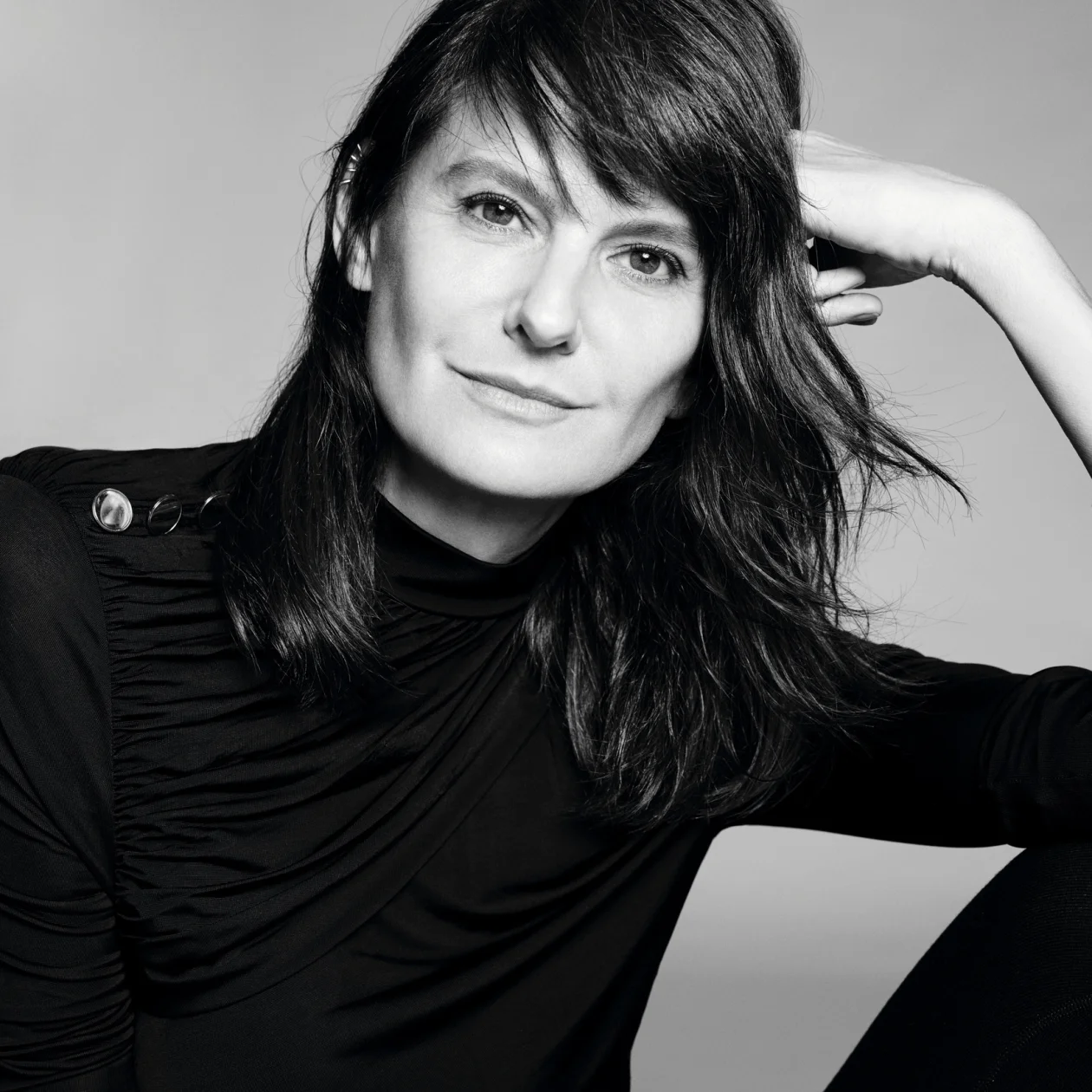
Marie-Amélie Sauvé has been a pivotal figure in luxury fashion for over two decades, shaping trends and driving creative direction for iconic brands and publications. Her work spans brand direction, product innovation and image making with fashion’s most influential designers and photographers, helping to steer many houses to global success, both artistically and commercially.
She is also the founder and creative director of Mastermind, a magazine she describes as an “idea laboratory” for masters in art, design and culture, providing a platform for creative exploration and dialogue.
What draws you particularly in the 5th district’s lifestyle?
MAS
What I particularly like in the 5th district is its singular energy, at times intellectual or bohemian. The cafés, bookstores and small independent stores around the Panthéon or rue Sainte-Geneviève give the neighborhood a unique vibrancy, far from some of the capital’s more polished areas. The 5th embodies a more intimate and lived-in lifestyle in which daily habits include drinking a coffee at the counter, picking a book randomly or being surprised by a window display.
How does walking around the 5th inform your practice?
MAS
I feel nourished by what I see when I walk around the steep, narrow streets, look up to the detailed rhythm of the facades and discover new urban perspectives. I let my imagination float. There is also a particular feeling in the air, that of an intellectual, yet accessible Paris. I am regularly drawn to many inspiring details: they challenge my way of thinking and help me imagine new stories to tell.
What secrets spots and addresses do you favor most in this area?
MAS
I enjoy L’EAU by MM where fashion is showcased in a confidential manner. I enjoy the store’s discreet yet edgy selection, which outlines the neighborhood’s vanguard spirit. I also like stopping at Tram Café-Librairie: the hybrid coffee shop is ideal to order a coffee, spark a conversation or pick from a great selection of coffee table books. Off the beaten track, it manages to have both a deep and lively vibe. Each time I visit the National History Museum (Muséum national d’Histoire naturelle), I am struck by the monumentality of the Grande Galerie de l’Évolution. For centuries, scientific knowledge has been displayed here as an aesthetic quest. It simply broadens the imagination.
-
L’EAU by MM
-
Tram Café-Librairie
-
Muséum national d’Histoire naturelle
Interview with Bas Smets
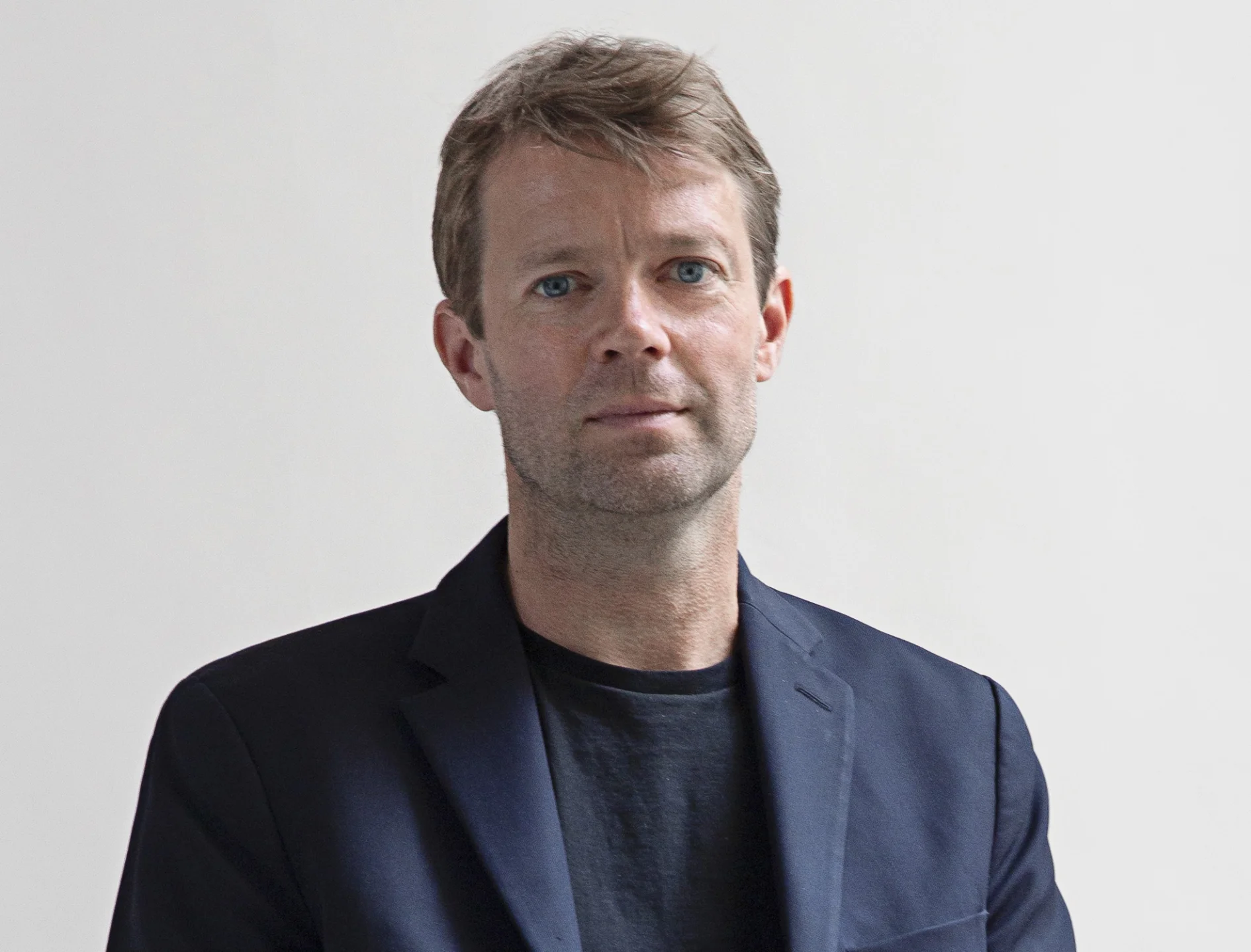
Belgian landscape architect Bas Smets set up his office in Brussels in 2007 and has since worked in more than a dozen countries. His latest projects include the Belgian Pavilion at the the Venice Architectural Biennale 2025; the redevelopment of the green spaces around Notre-Dame in Paris; Le Parc des Ateliers, a vast semi-desertic urban parc for the LUMA Foundation, Arles; and turning the Île de la Cité in Paris into a verdant paradise.
www.bassmets.be
What draws you particularly to the area’s green spaces?
BS
I find the Bibliothèque François Mitterand, the National Library’s Garden really inspiring. When it was created 20 years ago, it was a real game changer. The idea was to reproduce a section of Normandy’s forest in the heart of the capital. It had never been done before and remains, to this day, a reference point in the cultural landscape. The fact that visitors can observe the forest’s canopy from above was completely new.
Another area I really like is the open-air Sculpture Garden along the river Seine (located between Pont de Sully and Pont d’Austerlitz): it has its own microclimate and hassmall amphitheaters near the water’s edge where people gather, play and dance.
How does visiting these spaces inform your practice?
BS
I like to go back to the BNF to see how the forest and the pine trees have grown.
I do the same inside the Jardin des Plantes; it holds a fabulous collection of trees and plants brought back two centuries ago by the leading French biologists and botanists of the time. I love to see how they grow and evolve season after season.
What secrets spots and addresses do you favor most in this area?
BS
There is a small hill with a vegetal labyrinth hidden inside the Jardin des Plantes — I like to walk up there, reach the little gloriette named after 18th Century gardener Buffon and suddenly, you’re above the tree line and see Paris from a totally different viewpoint. Another perspective I enjoy is when I stand near the sculptural Mémorial des Martyrs de la Déportation behind Notre-Dame: from there, the river’s confluence looks wild, and the sight of Sainte-Geneviève makes for an incredible look-out point.
-
Bibliothèque François-Mitterrand
-
Gloriette de Buffon, Jardin des Plantes
-
Mémorial des Martyrs de la Déportation
Interview with Julia Sedefdjian
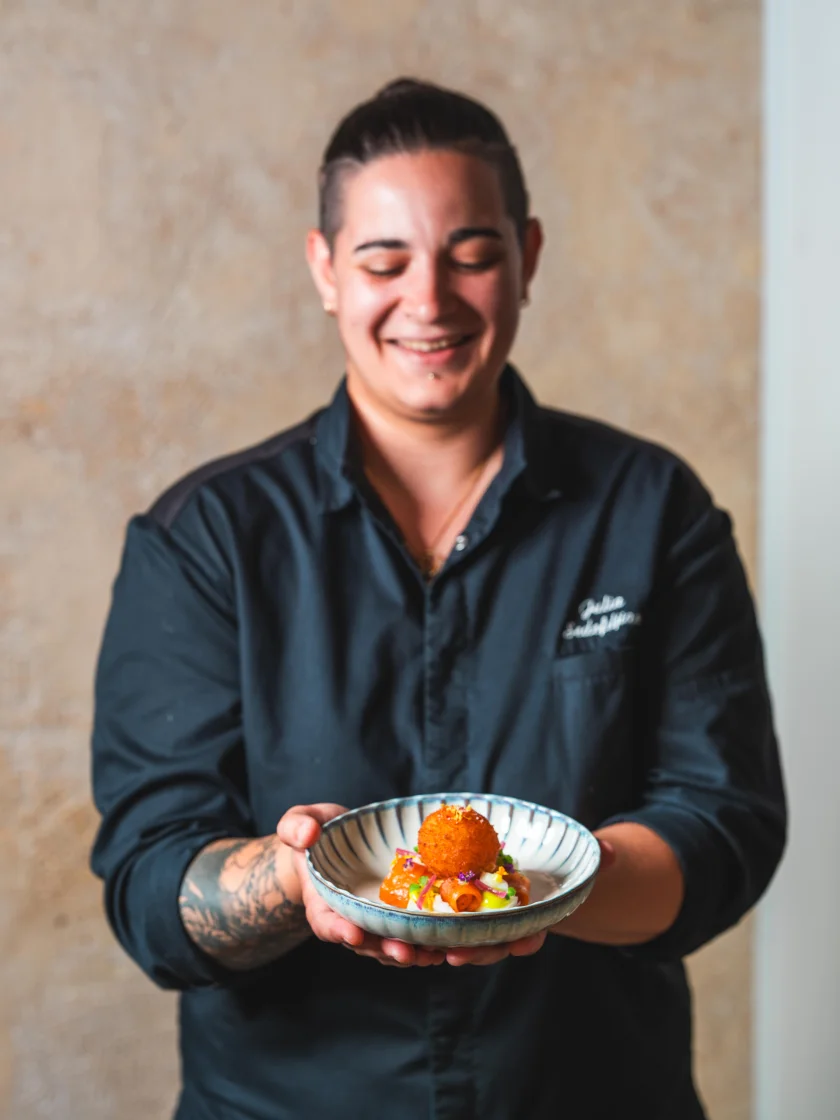
In 2014, Julia Sedefdjian was crowned as the youngest Michelin-starred chef: she was 21. Since, she has been busy spearheading restaurant Baieta – which means ‘small kiss’ in the local dialect around Nice – in the heart of the 5th near the Seine. With two Sicilian grandmothers, Sedefdjian celebrates the rich heritage of the Mediterranean cuisine with influences from in and around Provence. Inside Baeita’s contemporary interiors, whatever the season or weather, a piece of sunshine awaits.
What draws you particularly to the 5th district’s food culture?
JS
I love how eclectic it is! Addresses range from institutions like La Tour d’Argent to gastronomic restaurants led by inspiring Michelin-starred chefs like Guy Savoy or William Ledeuil, from historic favorites like Lipp or chez René to neighborhood Asian eateries, from world-food canteens to sandwich shops favored by students. It’s so diverse and vibrant!
How does living in the 5th inform your practice?
JS
So much diversity brings light to my day-to-day life as a chef and as a businesswoman. I have always considered being surrounded by such great names and maisons as not only luck but as a healthy competition. Each and every one of us needs to showcase dedication and talent for the neighborhood to remain unique.
What secrets spots and addresses do you favor most in the area?
JS
I enjoy visiting restaurants, bakeries and cafés in the 5th on my free time. On Place Maubert, ‘La Maison d’Isabelle’ bakes beautiful, buttery croissants. The Great Mosque is an ideal hideaway for a mint tea and Moroccan pastries sitting outside in the courtyard or a comforting couscous in winter. The same goes for the Chinese eatery Trantranzai which serves heartwarming noodles in an unpretentious decor. For an incredible piece of meat or roast, I head to La Rôtisserie d’Argent, with views over the river Seine. And nothing beats William Ledeuil’s Kitchen Ter(re) when it comes to seasonality and creativity: every time I order one of his broths, my senses travel.
-
Baieta
Menu from 60€.